Category: Uncategorized

  • Kiltmaking for Veterans

    Kiltmaking for Veterans

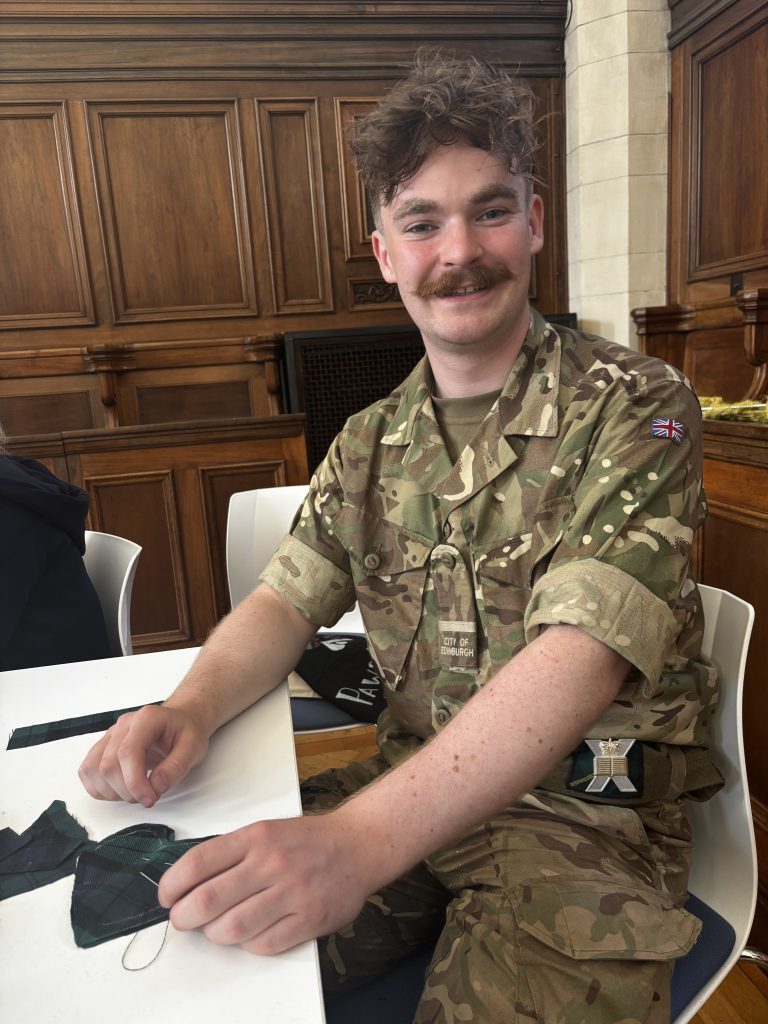
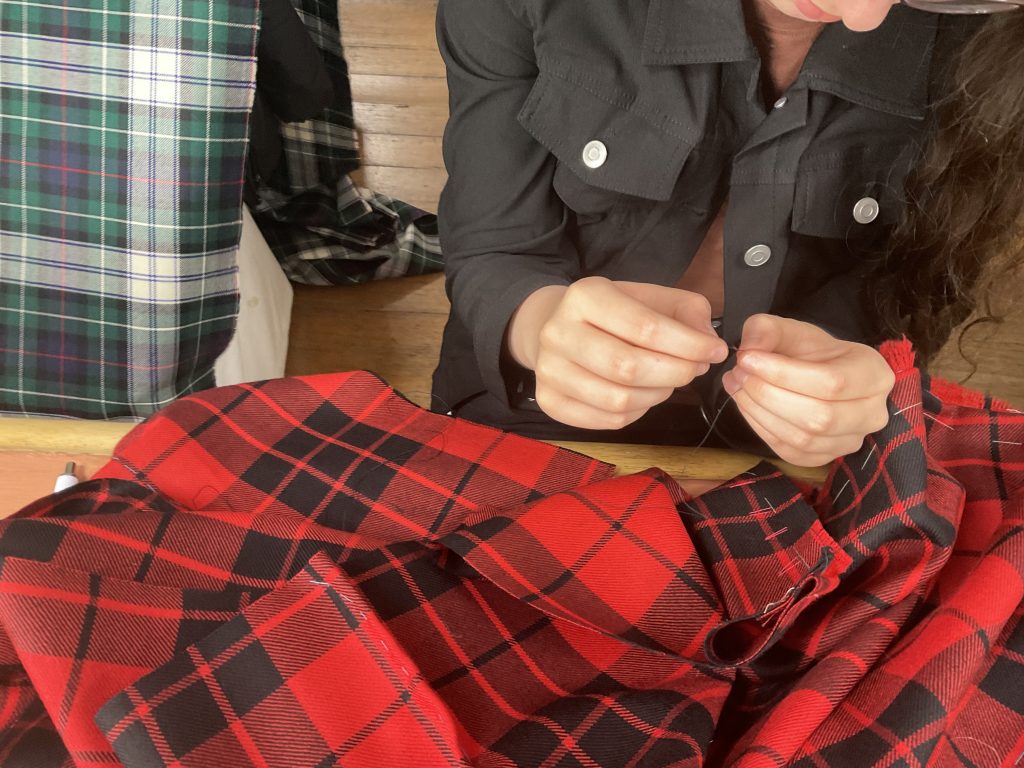
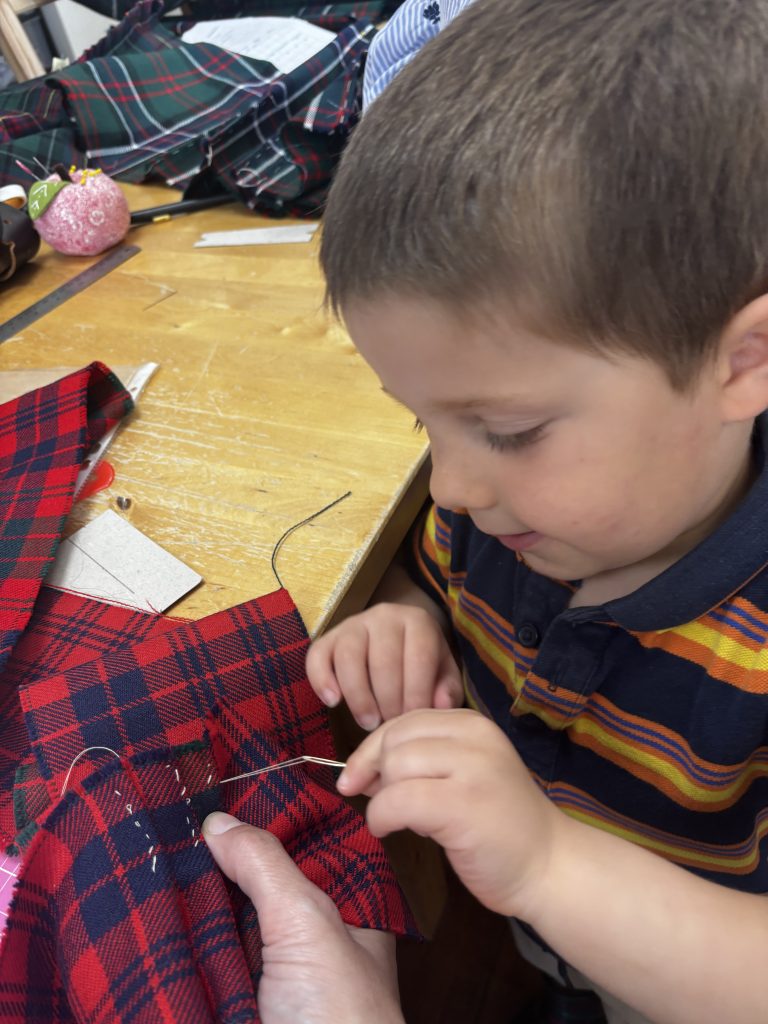
    Kiltmaking for Veterans is a practical, skills-based course for Scottish veterans, delivered by Làmhan and taught by veteran and professional kiltmaker Hannah MacFarlane of Thistle and Cloth. The project has taken almost 18 months to develop and secure funding, and we are incredibly grateful to Stirling Voluntary Enterprise for the grant that has made it possible to get the programme off the ground.

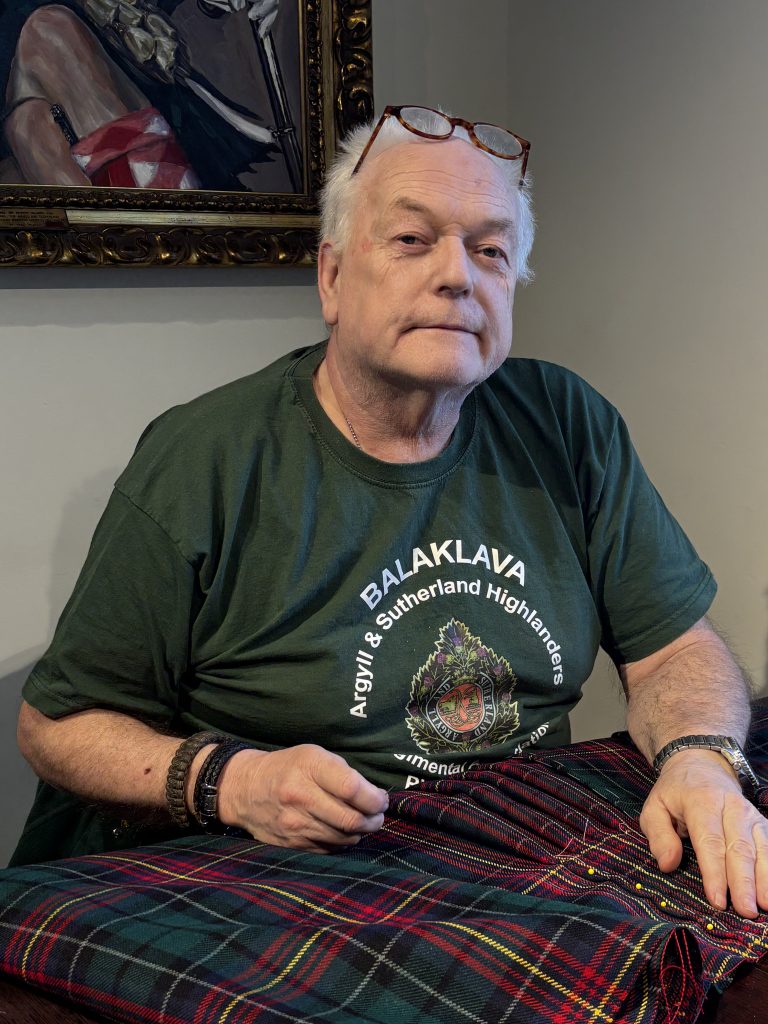
    The course will take place at the Argyll & Sutherland Highlanders Museum at Stirling Castle and will bring together a small group of veterans to learn traditional, hand-sewn kiltmaking techniques. Over several months, participants will work at a steady pace in a supportive environment, developing technical skills, confidence, and focus through making.

    Participants will work collectively on kilts made from a new tartan developed by Hannah in collaboration with Lochcarron, and in consultation with members of the Scots Veterans’ Pipe Band. The finished kilts will be worn by the band, meaning the work created during the course will have a clear purpose beyond the workshop.

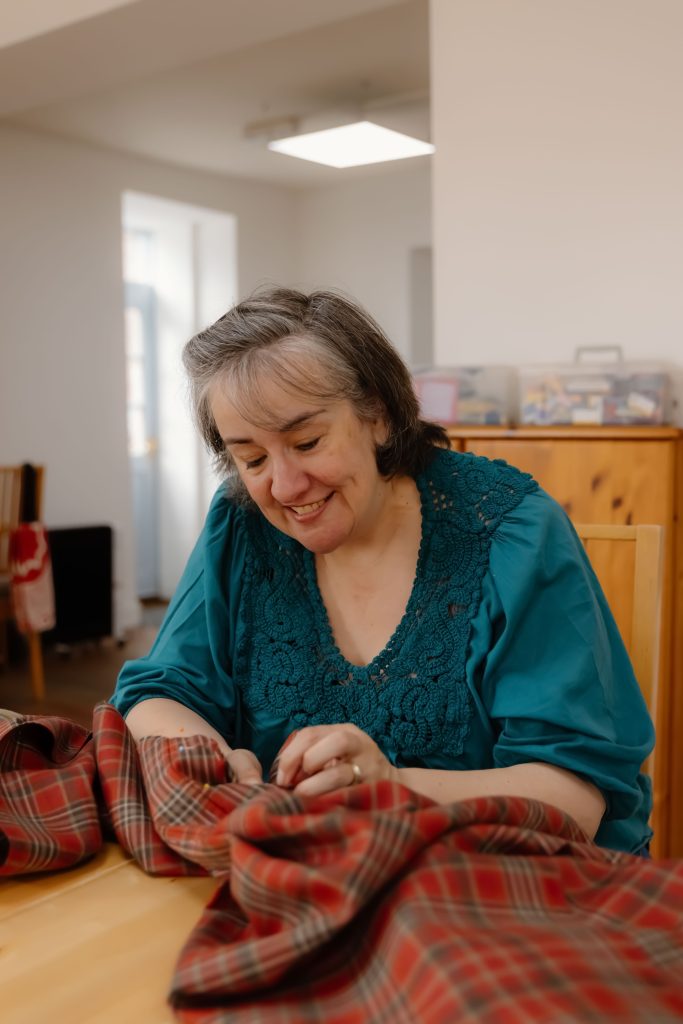
    Hannah MacFarlane stitching a kilt on a sunnier day in Ardgay

    Why kiltmaking?

    Traditional kiltmaking is currently listed as an endangered craft on the Heritage Crafts Association Red List. There are relatively few practitioners, training routes are limited, and the cost of learning is high. Becoming a skilled kiltmaker requires time, specialist knowledge, and access to expensive materials, all of which make entry into the craft difficult.

    Without active support for training and transmission, there is a real risk that these skills will continue to decline. Kiltmaking for Veterans responds to this by removing financial barriers and creating structured, supported time to learn. It treats craft skills as something worth sustaining, not only for their cultural significance, but for the people who learn and carry them forward.

    The Colours Room at the Museum. This is where our students will be learning. The flag in the centre right of the picture in the frame was at Balaclava.

    Making, mental health, and focus

    This course is not a therapy programme, but it recognises the mental health benefits of working with your hands. Slow, skilled making requires concentration, patience, and presence. It gives shape to time. Progress is visible, but it cannot be rushed.

    For many veterans, particularly those adjusting to life after service, this kind of focused, practical work can be grounding. The course will offer space to concentrate, to learn, and to contribute without pressure or judgement. It values process as much as outcome.

    Hannah (at the podium) and Jo (next to the screen) presenting the project at the Scottish Parliament in January.

    Hannah’s experience

    Hannah served for 13 years in the Royal Air Force and the Army, playing in military bands. After being medically discharged, she experienced the loss of structure and identity that many veterans face when leaving service.

    Learning kiltmaking became a way back into meaningful work. Over time, it gave her a renewed sense of purpose and direction, eventually becoming her profession. As both a veteran and a kiltmaker, Hannah brings a particular understanding to the course — of military culture, of transition, and of the value of quiet, skilled work.

    Why Làmhan is involved

    Làmhan’s involvement in this project comes from personal experience and long-term observation of how service affects people and families.

    Jo, the founder of Làmhan, grew up seeing the impact of military service through her grandfather. He was clearly affected by his experiences, though at the time there was no language for what we would now recognise as PTSD. Those effects shaped family life in quiet, lasting ways.

    Jo also has close friends who are veterans and has seen how difficult it can be to move out of service and into civilian life, particularly when structure, routine, and shared purpose fall away. Alongside this, her father is a retired police officer, bringing a different but related family experience of public service, exposure to risk, and long-term impact.

    Scottish identity, craft, and use

    Kiltmaking carries particular weight in Scotland. For many veterans, kilts are not abstract symbols but practical garments tied to service, ceremony, and music. They are worn, cared for, altered, repaired, and passed on.

    The kilts made during the course are not practice pieces or samples; they are being made to be worn by the Scots Veterans’ Pipe Band. Participants will know who the kilts are for and where they will be used. The work connects directly to people, events, and communities that already exist.

    Jo with Norrie Gillies, who is a serving Army Piper and runs the Scots Veterans Pipe Band.

    Veterans’ pipe bands and collective work

    The involvement of the Scots veterans pipe bands, including the work being done by Norrie and others, reflects the importance of peer-led spaces for veterans. These bands provide continuity, belonging, and a reason to keep turning up.

    This course allows participants to contribute to that wider community in a practical way. The work is collective. Everyone is equal. Everyone involved will know who the kilts are for, and why they matter.

    About the course

    Kiltmaking for Veterans is free of charge and open to Scottish veterans only. Places are limited, and participants are expected to commit to attending all sessions within their chosen course block. While no formal qualifications are required, it will be helpful if applicants have some previous sewing experience, as the course focuses on traditional hand-sewn techniques.

    This is not intended to be a quick or intensive course. The programme is deliberately spread over four blocks, with space between sessions, so participants have time to practise, reflect, and consolidate skills before moving on. Kiltmaking takes time, and the structure of the course reflects that.

    The course is designed to run primarily at weekends to make it more accessible to people with work or childcare commitments, including the tutor. Sessions will run from 10:00am to 4:00pm, with a break for lunch. Participants are encouraged to bring a packed lunch; there is access to a kitchen and fridge on site. Tea and coffee will be available free of charge throughout the day.

    This course represents the first stage of what we hope, in time, will become a longer programme, offering further opportunities for learning and continued involvement beyond this initial phase, subject to funding and capacity.

    COURSE DATES

    Group 1: March – May 27, 28, 29 March 24, 25, 26 April 2–3 May 16–17 May

    Group 2: June – July 5, 6, 7 June 19, 20, 21 June 4–5 July 11–12 July

    Group 3: September – November 11, 12, 13 September 25, 26, 27 September 24–25 October 14–15 November

    The programme is funded by Stirling Voluntary Enterprise and delivered by Làmhan.

    If you are a Scottish veteran and are interested in taking part, please complete the application form.

    APPLICATION FORM

  • An update on St Kessog’s Church

    An update on St Kessog’s Church

    St Kessog’s Church is an important historic building at the heart of Callander, and its future is something that many people care deeply about. We share that concern.

    Làmhan’s interest in the building is rooted in care, stewardship and long-term responsibility. As a B-listed structure of architectural and cultural significance, the church deserves thoughtful guardianship. Prolonged vacancy places historic buildings at risk, and we believe it is important that St Kessog’s Church is secured and cared for rather than continuing to deteriorate.

    This week, Làmhan is submitting an offer to Stirling Council to purchase St Kessog’s Church. This has not been an easy decision. There are undoubtedly easier options available to us. However, this decision has been guided by a belief that protecting and caring for heritage – particularly buildings that sit at the heart of their communities – requires commitment, patience and long-term thinking.

    Our intention, should the purchase proceed, would be to see St Kessog’s Church brought back into appropriate, respectful use over time. The building’s primary role would remain cultural, educational and community-focused, reflecting both its history and its civic importance. Alongside learning, heritage and community activity, this would include traditional civic and cultural uses such as weddings, ceremonies and ceilidhs, which are widely recognised as compatible uses for historic church buildings and help keep them active, cared for and financially sustainable.

    It is important to be clear that this would be a long-term project. Restoring and adapting a listed historic building is complex, costly and time-consuming. It is not a quick process, and it is not one that can be rushed. Any future work would take place in phases, subject to funding, professional assessment, permissions and capacity, with conservation, safety and sustainability as central priorities.

    Black and white photo from Trove.Scot, other photos taken by me last month.

    We are also very aware that other positive community projects are developing in Callander. In particular, Callander Community Development Trust’s plans to develop the former primary school represent an important and complementary opportunity for the town. Làmhan sees these projects as collaborative rather than competitive, and we are committed to working closely with CCDT to ensure there is no unnecessary overlap and that activity is coordinated in a way that strengthens provision overall and makes best use of community resources.

    At this stage, no detailed plans have been finalised. The immediate focus is on securing the building and establishing a responsible basis for its future care. Decisions about use and development would be taken carefully and over time, informed by specialist advice and guided by public benefit.

    Làmhan recognises that ownership of a building like St Kessog’s Church carries serious responsibilities. Our aim is not rapid change, but long-term guardianship – ensuring that this important building is protected, maintained and, in due course, able to serve the community again rather than remaining vacant and at risk.

    Above are two images of the same windows. They are beautiful. They deserve to be preserved and enjoyed once again.

    I understand the strength of local feeling around St Kessog’s Church, and will continue to approach its future with care, transparency and respect for its heritage.

    Jo Watson, 9th February

  • Craft and crèche

    Craft and crèche

    When my children were little, I often wished there was a space where I could spend time being creative while they were happily occupied nearby. Now my kids are 20 and 22, and it feels slightly ironic that this is the moment we’re finally creating that space. Craft & Crèche is exactly the kind of group I would have loved to attend when they were small, and I’m so excited to see it come to life at Lamhan.

    The idea is simple. Every Monday morning, parents and carers can come together at the start of the week to craft, chat, and enjoy a warm, welcoming environment while their children take part in fun, age-appropriate activities. I’m writing from my own lived experience as a mum, but we know it’s not always mums who care for little ones — dads, grandparents, foster carers, and anyone supporting a child are all very welcome. Our aim is simply to support families and carers in our community.

    There’s something about Mondays that always felt a little harder for me — I don’t know about anyone else, but it was the day I missed my partner the most during the week — and having a friendly group to connect with makes such a difference.

    Those attending can learn some simple beginner sewing with Eden, bring along their own craft projects, or just enjoy sitting by the fire with a cup of tea and a few snacks. It’s all about shared creativity, relaxed conversation, and having a bit of time for yourself while still being close to your little ones.

    For the children, we’ll be offering juice and age-appropriate snacks, along with fun activities to keep them engaged and happy. I’m really hopeful that we can encourage even our smallest visitors to start making art and trying very simple crafts too — messy hands and big smiles very much welcome.

    To help us plan properly, we’ll be asking everyone to sign up each week. This is simply so we know how many craft materials and refreshments to prepare in advance, and to make sure we’ve got enough supplies for everyone.

    One thing that feels especially important to say is that there is absolutely no cost to attend Craft & Crèche. We know how hard things are just now for families, and we want this group to be open and accessible to everyone. If people are able to, a few pounds now and then towards refreshments is always very welcome, but it is never required. From time to time, we may also ask participants to complete a short form or share a testimonial, which helps us with future funding applications so we can continue offering the group for free while ensuring our staff are paid fairly for their work.

    We’re incredibly grateful to the Callander Hydro Fund, through the Callander Community Development Trust, whose support has made a real difference to our space. Their funding has allowed us to install new energy-efficient heaters in the studio, making it a warm and comfortable place for families to gather — especially important on chilly Monday mornings.

    Craft & Crèche is about community, creativity, and connection. It’s about giving carers a moment to breathe, make, and meet others, while children play, explore, and begin their own creative journeys. I can’t wait to welcome you all. We are starting on 23rd February and hope to meet you there!

  • The Constantly Flaring & Stitching Society

    The Constantly Flaring & Stitching Society

    It’s 1.18am, and I’m awake again with a flare.

    Anyone living with a chronic health condition will know exactly what I mean.

    Thankfully, I no longer have a uterus to add into the mix, but when I push myself a little further than my body would like (and the last few weeks have been ridiculously busy), it has a habit of screaming at me. Loudly. Usually at night. This has been part of my life for as long as I can remember, but it became particularly noticeable after pregnancy — when everything just felt harder, heavier, and more unpredictable.

    Overall, my hysterectomy has been a positive experience, but it took me ages to recover from, and it’s very much changed how I listen to my body.

    So, from this slightly foggy, very tired place, I’d like to introduce the Constantly Flaring & Stitching Society.

    The name arrived at 1.18am too — which feels about right. Eden and I have been working on setting up this project for months, including Eden completing training with Endometriosis UK, but the name popped into my head fully formed. My fellow endo sisters will absolutely get it. For those of you who don’t… honestly, be glad.

    What is the Constantly Flaring & Stitching Society?

    It’s a monthly sewing and crafting group for women living with endometriosis, adenomyosis, fibroids, and other gynaecological conditions. We’ll meet on the last Monday of every month, from 2–4pm, here at Làmhan.

    Each session will include:

    • A gentle sewing or crafting class with Eden, which is perfect for beginners
    • Space to bring along your own project for a stitch-and-bitch beside the fire
    • A relaxed environment where you can chat, sit quietly, or just be in company

    Any textile craft is very welcome — sewing, hand stitching, embroidery, patchwork, visible mending, knitting, crochet. I’ll be there every session — to listen, to support, and to make sure there’s tea. I’m very happy to support whatever you’re working on, with one important disclaimer: I don’t crochet and am mildly allergic to it… but thankfully Eden is not!

    How to book

    There are 10 places available each month, offered on a first come, first served basis to keep the group small, calm, and supportive.

    Places can be booked via our Events page on this website.

    Why we’re doing this

    Between us, Eden and I have lived with most gynaecological conditions and have experienced a wide range of treatments. We know how long and exhausting the road can be — the appointments, the recovery periods, the false starts, and the constant recalibrating of what your body can manage.

    What we also know is that making things helps.

    Crafting doesn’t fix chronic illness, but it can soften the edges. It gives your hands something to do when your mind won’t settle. It offers focus when your body feels out of control. And doing it alongside people who understand phrases like “it flared again” without needing a backstory is quietly powerful.

    This group isn’t about productivity or perfection. It’s about connection, care, and making space for the reality of living in a body that doesn’t always cooperate.

    Working with Endometriosis UK

    We’re really proud to be running the Constantly Flaring & Stitching Society in partnership with Endometriosis UK. Eden completed training with them as part of getting this group off the ground, and we’ve been incredibly well supported along the way.

    A special thank you goes to Pat from Endometriosis UK, who has been brilliant — encouraging, practical, and unfailingly supportive — helping us reach the point where we’re ready to open the doors next month.

    Who it’s for

    This group is for women (who were declared female at birth) living with:

    • Endometriosis
    • Adenomyosis
    • Fibroids
    • Other gynaecological or pelvic health conditions

    You don’t need to be good at sewing. You don’t need to bring anything fancy. You don’t need to be having a good health day. You just need to turn up as you are — flare, fatigue, hot water bottle and all. You can even come in your pyjamas and slippers if you need to.

  • Kiltmaking project 2026

    Kiltmaking project 2026

    I have been thinking a lot since the Heritage Crafts event last week — about the conversations I had, the shared concerns that kept coming up, and the quiet agreement in the room that something needs to change if traditional crafts like kiltmaking are going to remain viable in the long term. One conversation in particular stayed with me: I spoke with an academic who is researching pay and working conditions in kiltmaking, and hearing their perspective really sharpened some of the questions I have been grappling with at Làmhan.

    One theme that came up again and again was sustainability. Not environmenal sustainabilty – another topic all together which we are passionate about. About financial sustainability for organisations, but alo sustainability for the people actually doing the making — particularly in the context of the rising cost of living. Fair pay, realistic expectations, and working structures that do not rely on burnout or unpaid labour felt more urgent than ever. That is something we have been reflecting on deeply at Làmhan over the past year, and it has shaped the way we are approaching our next phase of work.

    We are about to launch a new project focused on supporting traditional kiltmaking through transparent pricing, fair pay, and flexible, home-based working. The project is still in its initial stages, but the values underpinning it are clear: recognising experience, paying makers properly for their skill and time, and building a model that can support both established makers and those earlier in their careers. We will be launching our new service in the Spring.

    Before going any further, it is important to say this clearly: this pricing structure is not intended to be an industry standard. Kiltmakers and other professionals are of course free to charge whatever they feel is appropriate for their work, and there is no single “right” way to price a handmade garment. What follows simply reflects how we have chosen to work at Làmhan, based on our values, responsibilities as a charity, and the realities of our context.

    To support this work, we are now inviting applications from kiltmakers to work with us on a freelance basis. We are interested in hearing from makers at a range of experience levels, from apprentices through to highly experienced kiltmakers. All work will be commissioned individually, with kilts made from the maker’s own home workspace.

    A core part of this project is transparency about both maker pay and customer pricing. Each kilt will be priced as labour + cloth + materials. Labour prices will be set according to the experience of the kiltmaker. From the labour price paid by the customer, a fixed £100 contribution supports Làmhan’s charitable work, including coordination, administration, training, and long-term sustainability. All remaining labour will be paid directly to the kiltmaker on a per-kilt basis.

    Cloth will be charged separately at cost, as tartans are priced differently by mills. Most traditional 8-yard men’s kilts require four metres of double-width tartan, typically priced at £30–£35 per metre. Very tall clients may require eight metres, as cloth cannot be split. In addition, a fixed £20 materials charge applies to every kilt, covering buckles, canvas, thread, and internal construction materials.

    Kiltmaker pay and indicative customer pricing (men’s hand-sewn kilt)

    Experience levelYears of experiencePaid to kiltmakerCharity contributionLabour charged to customerEstimated total price*
    Apprentice0–1 year£400£100£500~£650
    Junior1–3 years£500£100£600~£750
    Established3–5 years£600£100£700~£850
    Senior5–10 years£700£100£800~£950
    Master10+ years£800£100£900~£1,050

    *Estimated total includes labour, £130 cloth (average) and £20 materials. Cloth costs vary by tartan and height.

    These rates assume a traditional hand-sewn men’s kilt and reflect both experience and efficiency. Work will be paid per kilt rather than per hour, allowing experienced makers to benefit from speed and judgement while ensuring apprentices are paid fairly.

    We recognise that commissioning a handmade kilt is a significant purchase. Customers will be able to pay in instalments, allowing the cost to be spread over time. This does not change the total price and helps make a commissioned garment more manageable, while ensuring kiltmakers are paid fairly and promptly.

    Short interviews with kiltmakers will be held via Microsoft Teams, and we aim to keep the process straightforward and respectful of people’s time.

    To apply, we ask for a short covering letter telling us about your kiltmaking practice, why you are a kiltmaker and why you want to work with us, a CV or work history, and a portfolio of work. Portfolios can be shared in whatever format suits you best — photographs, a website, Instagram, or a PDF are all welcome. Please email to Jo at hello@lamhan.scot. Ideally we’d like to see several different styles.

    The deadline for applications is 16th February at 5pm.

    If you have any questions before applying, you’re very welcome to send us a message on Instagram or email Jo at hello@lamhan.scot.

    This project is still evolving, but it’s rooted in conversations like those at the Heritage Crafts event — conversations about how we value skill, how we support people to stay in the craft long term, and how we build systems that are fair, transparent, and sustainable. We’re looking forward to seeing where it leads, and to working with kiltmakers who share those values.

  • The decline of Gaelic in Menteith & Lennox

    The decline of Gaelic in Menteith & Lennox

    The Decline of Gaelic is a guest blogpost from Michael Newton. It was originally published in his bilingual book Bho Chluaidh gu Calasraid: From the Clyde to Callander (1st edition was 1990, 2nd edition 2010), and is reproduced here with permission.

    It is clear that Gaelic was spoken throughout most of the Lennox and Menteith until the Jacobite Rising of 1745. Gaelic religious texts were sent by a charity to the parishes of Luss and Buchanan in the year 1705. The parish of the Port of Menteith asked for a Gaelic-speaking minister in the year 1726, and we have an account written by a minister demonstrating how plentiful Gaelic was in this period: Gaelic was the language of the parishes of Callander, Aberfoyle, Luss and Tarbert; most of the people of the parishes of Port of Menteith and Buchanan, and of the north end of Drymen, spoke Gaelic.

    Many of the Lowlanders held the Highlanders in disdain on account of the Jacobite Rising of 1745, regardless of what side they took. The Gaels were subject to outside influences coming from all kinds of sources – the church, schooling, the government and industry – and they had little choice but to accept the practices of the English-speaking world, including language itself. The church was the only organisation that offered any support for Gaelic.

    When a new minister was needed in the parish of Buchanan in the year 1759, the people of the parish asked to be given a Gaelic-speaking minister. Duncan MacFarlane, who was from Arrochar, was the minister in the parish of Drymen between 1743 and 1791, and the sermons that he (and his son, who was the minister between 1792 and 1823) wrote in Gaelic still survive in the University of Glasgow.

    There are summary reports written by ministers about the year 1790 for the Old Statistical Account which describe the dwindling away of Gaelic: on the west shore of Loch Lomond, it was rarely found south of Luss; many people in the parish of Drymen spoke it, and there were a few who did not speak any English; everyone in the parish of Aberfoyle spoke it, although they were becoming familiar with English; only the poor in the parish of Callander spoke Gaelic.

    The Rev. MacFarlane wrote in the year 1763 that the English language held the position of superiority and that it was extinguishing Gaelic in the parish of Drymen, but the account written by the Rev. Graham in the parish of Aberfoyle in the year 1798 went even further: he asserted that the English tongue was so dominant and the attitudes of English-speakers so hostile to Gaelic that there would not be a trace of the language or the culture in a generation’s time.

    There were some people in these areas who, despite the difficulties, did their utmost to keep the language alive. The Reverend Stuart of Luss was involved with a group who were editing a Gaelic dictionary, although it was never completed. He contributed to the collection of Gaelic poetry gathered by the Reverend MacLagan, some of which appears in this book. He prepared a new edition of the New Testament which was printed in the year 1796, and he was assisted by the poet John Walker.

    The Reverend Patrick Graham of the parish of Aberfoyle was engaged in the Ossianic debate, attempting to defend the honour of the Gaels. Donald MacGregor was a schoolmaster near Rossdhu who collected traditional lore from the old folk at the beginning of the eighteenth century. He seems to have been able to collect this material from the last Gaelic-speaking generation there.

    When Dorothy and William Wordsworth went travelling in the year 1803, she wrote that there were very few people left in the Trossachs – they had already been cleared out. They met up with a MacFarlane close to Callander who only spoke a little bit of English, and his children, living only twenty miles away from Callander, spoke nothing but Gaelic.

    Alexander Campbell went travelling in the year 1802 and he observed that although Callander was Lowland in appearance, that it was largely Gaelic in terms of language and culture. He considered Strathyre to be completely Gaelic in every sense of the word. When he returned to the Highlands again in the year 1815, he encountered a boy who was fluent in Menteith Gaelic.

    Gaelic was not used in the church of Luss after the death of the Reverend Stuart in the year 1821, and this gave a decided advantage to the English language in the parish. The situation around Callander in the year 1845 does not appear to be so bleak, however: Gaelic was taught in two schools and spoken in the church. It can be seen in this book that there were still Menteith poets composing in Gaelic, such as Alasdair Buchanan and the poet who wrote the song ‘Welcome to Loch Venachar’.

    John Dewar went in search of stories under the patronage of John Francis Campbell in the 1860s, and he got more stories than he expected in the parish of Arrochar. John Francis Campbell had no need for him after that year, and it is very fortunate indeed that the Duke of Argyll was willing to be his patron while he travelled throughout Argyll and Perthshire. He was struck with illness in the year 1871 and died the next year, but during those ten years he recorded one of the most valuable existing collections of Gaelic folk-lore.

    The Gaels attending the Free Church in the Vale of Leven asked for missionaries to be sent to them in the year 1850. The congregation grew in size and a church was built for them in the year 1859. There was also a Vale of Leven Highlanders Society which met in Balloch.

    But at the same time, Gaelic was dying out around the Lake of Menteith: it was written at the end of the nineteenth century that only the old people remembered it. When Stephen Kane, who was raised in Stirling, was sent to Aberfoyle as a postman about the year 1898, however, he fell in love with this language that he had never heard before and learned it fluently from the people of the district.

    People were aware, and some of them regretful, that the native language was disappearing. Seumas MacDiarmid made every attempt to record oral traditions. When Duncan Stewart, who was a native of Callander, died in the year 1908, the townsfolk said that “no social function was ever considered complete to which Mr. Stewart did not contribute one or more Gaelic songs”.

    The people of Strathyre attempted to have a Gaelic-speaker employed in the school in the year 1909, although their attempts were not altogether successful – it must be remembered that the majority of people in Scotland were highly prejudiced against Gaelic at that time.

    Professor William Watson recorded an enormous amount of traditional lore from Parlane MacFarlane who was a native of Brig o’ Turk. “I know every stone and trench and hillock between Callander and Inversnaid,” said Parlane to the professor as they sat on Loch Venachar-side. Little by little, people like him have evaporated away in the twentieth century, although we are fortunate that scholars were able to record samples of the old tongue when they were researching Gaelic dialects in the year 1950. Gaels from Inversnaid, Brig o’ Turk, and Arrochar, among other places, were recorded. I myself have met a few people with smatterings of Gaelic at the end of the twentieth century, such as John Fisher, who was raised in Ardleish.

    It is a terrible tragedy that Gaelic has been lost, and a great deal of heritage along with it. It is also a matter of great regret that so few of the native inhabitants remain in the area. Be that as it may, this literature and tradition deserves to find a new lease of life among those alive in the present.

  • Tailoring training: investing in craft skills & the future

    Tailoring training: investing in craft skills & the future

    One afternoon a week, Cara and Sam travel through to Edinburgh to train with master tailor Poppy Wright at her studio. It’s time set aside for focused learning, careful practice, and building skills slowly and properly.

    Poppy brings an extraordinary depth of experience to this work. She has worked with very high-profile clients, as well as extensively across film and television — including serving as Head Tailor on Outlander for two series, working on the first two seasons of Bridgerton, and creating garments for artists such as Robbie Williams and Take That. Alongside this, she is now passing on her knowledge and training the next generation of tailors.

    Cara and Sam are learning skills that take time to develop, from pattern drafting and cutting through to fitting and finishing, building an understanding of why garments are made the way they are and growing confidence in careful, precise tailoring done properly. They’ve also both fallen slightly in love with Poppy’s industrial sewing machine (while I remain happily old-school and firmly in the hand-sewing camp), and all three of us are united in our admiration for her amazing professional ironing station, which has very quickly become the gold standard.

    This training is also helping us broaden how we think about Highland dress — not just kilts, but jackets, waistcoats and proper two-piece trews, all of which rely on strong tailoring foundations, good fit, and thoughtful construction. We have a strong commitment to slow fashion and responsible clothing production. We want to make things that take time, are made well, and are designed to last — clothing that can be repaired, altered, and worn for years rather than rushed through production and replaced. That approach requires skill, patience, and deep knowledge, which is exactly what this training is building. We are taking our time getting ready for whatever the future holds and investing in our team at the same time too.

    At present, there is nowhere in Scotland to formally learn tailoring skills in a sustained, practical way. That’s a huge gap, and one that risks these skills disappearing altogether. What Poppy is doing — opening her studio, sharing her knowledge, and actively training the next generation — is quietly radical. It’s a direct challenge to fast fashion, to short-term thinking, and to the idea that craft skills aren’t worth investing in. We’re incredibly grateful to be part of that, and are determined to carry it forward.

  • St Kessog’s Church, Callander

    St Kessog’s Church, Callander

    My first memory of Callander is tied to St Kessog’s Church. It was a lovely summer’s day 25 years ago, and I was visiting what was then the Rob Roy Centre. I remember being struck by the exterior of the building. Even before I knew much about its history or significance, it felt important – solid, dignified, and full of stories. Years later, I returned when the building was operating as the Clanranald Centre. Like many people in Callander, I was sad when it stopped being used. Since then, it has stood quietly – clearly still loved, but without a clear role – a loss felt by many in the town.

    At Làmhan, we work to reconnect people with Gaelic language and culture in ways that are welcoming, community-led, and rooted in place. In October, we began Gaelic classes in Callander with local primary teacher Mhairi Nic Aoidh. What began as a small local class has quickly grown. We now also run online classes, with students joining us weekly from across Scotland, as well as from America and Canada – alongside people in Callander itself. This growth has shown both local and international interest in reconnecting with Gaelic through place-based learning.

    Callander has deep Gaelic roots. For centuries, it was a predominantly Gaelic-speaking town. The last native speaker died in the 1990s – a reminder of how recently the language fell silent here. Just a few miles away, Doune was traditionally Scots-speaking, placing Callander at the edge of the Gàidhealtachd, where languages and cultures met.

    A conversation with Mhairi helped move our thinking forward. After performing at the Mòd in Fort William – the national festival celebrating Gaelic song, music, and language – we began imagining what a similar, local-scale event could look like in Callander. That conversation sparked the idea of establishing a fèis. A fèis is a community-based Gaelic arts festival focused on traditional music, song, dance, and language. Fèisean are about participation, learning, and passing culture between generations. We are now actively working towards setting up a fèis for Callander – something that feels both rooted in the town’s history and hopeful for its future.

    The surprising interior of the building

    Three weeks ago, we carried out an internal inspection of St Kessog’s Church. We were genuinely surprised by what we found. The interior is in far better condition than expected. This is due to essential stabilisation work already undertaken by Richardson and Starling on behalf of Stirling Council, which prevented further deterioration. More detail on this work can be found here:

    I have been unable to find out for definite when this work was done, but ChatGPT seems to think it was done towards the end of 2024. While the spire still requires significant attention, we believe funding could be accessed from sources such as Historic Environment Scotland, the Scottish Land Fund, the Architectural Heritage Fund, and other charitable funders that support the reuse of historic buildings. There is a lot of interest from the Scottish government in saving our historic built environment, especially since the Church of Scotland has put so many former churches up for sale this year.

    St Kessog’s Church has stood at the heart of Callander for generations. We believe the time has come to bring it back into active community use – as a place for language, music, learning, and gathering. To help shape that future, we’ve created a short survey:

    https://book.plinth.org.uk/survey/qQi4lXXfl4YWpjYbator

    Whether you remember the building as the Rob Roy or Clanranald Centre, have Gaelic connections, live locally, or simply care about the future of Callander, your voice matters.

    We should note that we’ve received a small number of rather rude anonymous comments, possibly from the same individual. For this reason, we are now asking respondents to leave an email address. We will only contact you if you give us permission to. This helps ensure feedback is constructive and allows us to keep people informed as plans develop.

    This work will only succeed with community support. By taking part, you are helping us show that there is real appetite to see St Kessog’s Church restored not just as a historic building, but as a living space once again – rooted in Callander’s Gaelic past and open to its future.

    To read what a fèis is, and what it offers the local community, please see Fèisean nan Gàidheal’s brilliant website which has lots of useful information: https://www.feisean.org/en/feisean-en/what-is-a-feis/

    Images screenshotted from trove.scot of St Kessog’s when it was a regular place of worship

  • Celebrating our first term of Gaelic at Làmhan

    Celebrating our first term of Gaelic at Làmhan

    Our first term of Scottish Gaelic beginner classes at Làmhan’s studio in Callander has been a wonderful and, if I’m honest, slightly surprising success. When we opened the doors in September, we hoped a handful of people might be curious enough to give Gaelic a try. Instead, we found ourselves welcoming full classes, enthusiastic learners, and a warm sense of community forming around the language. Much of this is thanks to our brilliant tutor, Mhairi Nic Aoidh, whose energy, knowledge and kindness have shaped every session. The progress people have made in just a few weeks has been remarkable. I’ve loved listening in on Saturday mornings, especially when Mhairi introduces a song. Last week I even joined in with her for a singsong, and it felt like a small reminder of how central music has always been to Gaelic learning and memory (Newton 2009).

    Because of the demand, we’ve decided to expand what we offer. An online beginners class will start on Sunday evening, 30th November, so those who can’t attend in person—or who live further across the Trossachs—can still take part.

    We’re delighted that this online expansion also means we will be welcoming our first international students, which feels like a wonderful step forward for Làmhan and for Callander’s Gaelic story. In January, even more classes will be added in the studio. This growth reflects a genuine wish to reconnect with Gaelic in a place where it was once part of everyday life. Callander and the surrounding area were part of a strong Gaelic-speaking region well into the nineteenth century (Withers 1988). Re-embedding the language here feels like a cultural homecoming, and, with my own Masters in Highlands and Islands Culture from UHI, I feel deeply committed to helping our community reconnect with that heritage.

    We’re also planning a little get-together to celebrate everything our learners have achieved. On the evening of 12th December, we’ll be heading to the pub for a wee ceilidh to mark Christmas and toast the success of our first term bringing Gaelic back to Callander. And by ceilidh, we mean the Gaelic kind—often misunderstood today as something centred entirely on dancing.

    Traditionally, a ceilidh was simply a gathering: a warm, unhurried evening of conversation, storytelling, songs, tunes, and community company in what was known as the taigh-ceilidh (ceilidh house). People brought whatever they had to share—a song, a story, some news, or simply their presence. That is very much the spirit we’re aiming for: relaxed, friendly, and rooted in the older meaning of ceilidh as social connection rather than set dances.

    Uisge beatha, Water of Life. An important element of any ceilidh! *

    Song, of course, is at the heart of this heritage. Singing together helps build confidence, supports pronunciation, and connects learners to the rhythms and stories of the language in a way that textbooks never could. It’s no surprise that after many years of Gaelic decline, community singing remains one of the strongest surviving traditions (Shaw 2020).

    Mhairi and I have found ourselves talking more and more about how to bring these strands together, and that conversation has now grown into a plan: we want to establish the first-ever Fèis in Callander. A Fèis would bring language, music, arts and community participation into one place, creating opportunities for children, families and adults alike. But we’ll need volunteers, ideas and local support to get it off the ground, so we’re holding a meeting at Làmhan’s studio in Callander on Friday 5 December at 7pm for anyone who would like to help shape it.

    Common European Framework of Reference for Languages

    Looking ahead to January, our classes will follow the Common European Framework of Reference for Languages (Council of Europe 2020). To help people understand what each level means in practice, here is a little more detail:

    A0 (Complete Beginners): This is for those who have never learned Gaelic before. We start with pronunciation and the building blocks of spoken Gaelic—basic greetings, personal introductions, simple questions and answers, and key vocabulary such as family, numbers and everyday objects. Learners begin forming short, useful phrases straight away.

    A1 (Beginner / Early Stage): Our A1 groups are for learners who already have some early Gaelic—often those who have completed an A0 block with us. At this stage, learners can understand and use familiar expressions and begin to talk about themselves, their families, daily routines and simple needs. We build on sentence structure, introduce regular verbs, start to look at lenition and gender, and expand vocabulary each week.

    A2 (Post-Beginner / Elementary): Learners at A2 can handle everyday conversations with increasing ease and understand the gist of slow, clear speech. We work with past and future tenses, talking about plans, experiences and events. Vocabulary broadens into themes such as home life, hobbies, work, places and community. At this level, learners can hold a basic chat with a Gaelic speaker and follow classroom conversations more naturally.

    Across all levels, our approach prioritises listening and speaking, with reading and grammar woven in steadily and supportively. And of course, song is a thread that runs through every class. What has started as a small experiment has already begun to grow into something much larger. Together, we are not only learning a language but helping to bring it home.

    References

    Council of Europe (2020) Common European Framework of Reference for Languages: Learning, Teaching, Assessment. Strasbourg: Council of Europe.

    Newton, M. (2009) Warriors of the Word: The World of the Scottish Highlanders. Edinburgh: Birlinn.

    Shaw, M. (2020) Singing the Nation: Gaelic Music and Identity. Glasgow: CLÒ Ostaig.

    Withers, C. (1988) Gaelic in Scotland 1698–1981: The Geographical History of a Language. Edinburgh: John Donald

    *: Before any (German) lawyers spend weeks emailing me about supposed copyright infringement when there’s none, this image too comes from Canva which gives me the right to publish it on here.

  • A Pocket, a Stitch, a Beginning

    A Pocket, a Stitch, a Beginning

    On Monday Cara and I started something we have both been dreaming about for a long time: our bespoke tailoring training with Poppy Wright at her studio. It felt like a real milestone for Làmhan, the beginning of a new phase in our journey of learning, making, and reconnecting with traditional craft skills.

    Poppy at work on one of her industrial sewing machines. Not as scary as I first thought.

    Each Monday afternoon from now on, we will be travelling to Poppy’s studio for hands-on training in the skills of tailoring. Our goal is to build up our understanding of this slow, meticulous art form not only so that we can make beautiful things ourselves, but so that we can share what we learn with others and help keep these skills alive in our community. This opportunity has been made possible by a grant from FEL, whose support is allowing us to invest in learning so that what we gain can be passed forward. It is part of Làmhan’s ongoing commitment to sustainability, not only in materials but in knowledge: valuing the people, patience, and processes behind handmade things.

    There is a calm, purposeful feeling as you step into Poppy’s studio. Thanks to the gigantic Victorian windows, the whole space is filled with bright, generous light that seems to illuminate every surface. Sample pieces hang on the walls, showing stages of work in progress, while sewing machines, pressing tools, and neatly stacked materials line the room. It is not a show space but a working one — a place where garments are being shaped, tested, and refined. The air carries the warm scent of cloth and steam, and there is a quiet focus that immediately makes you want to begin making something yourself.

    Number one item on my personal wish list for our studio. This iron set up is beyond amazing

    Our first task was to learn how to make a breast pocket. It did not seem simple at all. In fact, I found it quite baffling at first — the geometry of it, the precision, the careful sequence of steps. Coming from a background where I am more familiar with eighteenth-century tailoring, I was struck by how much more complex modern methods are. The techniques, materials, and underlying structures have evolved into something intricate and highly engineered. What looks like a small detail on a finished jacket is, in truth, a miniature piece of architectural design.

    We began by marking out the pocket on our fabric using tailor’s chalk and a ruler. Poppy explained each step carefully: how the angle of the pocket affects the overall look of the jacket, how the welt must be perfectly aligned, how even a millimetre of difference can change the outcome. Cara quickly became fascinated by the industrial sewing machine — the hum of it, the speed, the sense of precision it offers once you find your rhythm. She said afterwards that it felt powerful, almost meditative, to guide the fabric through and see a crisp, straight line appear under the needle.

    I, on the other hand, gravitated toward hand sewing. There is something deeply satisfying about the quiet rhythm of needle and thread, about watching the fabric respond to your hands alone. I did try my hand at the machine for part of the pocket, though, and I can see why Cara loves it. There is a thrill in learning to control a tool that is so central to the craft. We both agreed that one of our unexpected highlights was using Poppy’s professional iron. It is heavier and more powerful than any domestic iron, with a built-in steam unit that presses fabric to perfection. Tailoring relies on pressing just as much as stitching; it is what gives structure and definition to the garment. Poppy reminded us that an iron is not only for finishing — it is an active tool in shaping fabric, helping it remember its form.

    Most tailors, Poppy explained, traditionally work standing up at a high cutting table — a posture that allows for accuracy, range of movement, and speed. Thankfully, there was also a lower table and a chair for me, which made it much easier to settle into the fine detail of the handwork. I could see, though, why standing is important to the art of tailoring — the constant motion between marking, cutting, pressing, and sewing. It is a physical process as much as a creative one.

    One of the best parts of this training is learning directly from someone who has spent years immersed in this craft. Poppy trained as a bespoke tailor and runs her own studio where she creates custom garments made to measure. She carries a deep respect for the traditional processes — measuring, drafting, cutting, fitting, and finishing — while also finding ways to make the practice sustainable and relevant today. Throughout our first session she moved between us, demonstrating, adjusting, and explaining. She never rushes. Every step is an opportunity to understand why something is done a certain way, not just how.

    When Cara completed her pocket, Poppy came over to examine it carefully. After a quiet moment of looking, she smiled and said, “You are a natural tailor.” Cara’s face lit up. It was not just a passing remark, but a genuine recognition of her skill and potential — a small moment that carried so much encouragement. Seeing Cara’s joy and pride made the whole room brighter.

    As the afternoon went on, something shifted. The work began to make sense; the shapes and layers came together, and the earlier confusion gave way to small moments of understanding. Near the end of the session, Cara began giggling with delight — pure, unselfconscious joy at seeing her pocket take form and realising what she had achieved. It was such a lovely sound, echoing through the bright studio, and it made all the hard work of the last few weeks feel entirely worthwhile. Moments like that are what remind us why we do this — the joy of learning, of making, of seeing something come together through patience and effort.

    At Làmhan, our work has always been about hands — the meaning of our name itself. We believe that making things with our hands is not only about producing objects, but about creating connection: to materials, to each other, and to our environment. Bespoke tailoring fits beautifully into that philosophy. It is the opposite of fast fashion — it is slow, deliberate, and personal. Every garment is shaped to an individual body; every stitch has purpose. In learning these techniques, we are reconnecting with a lineage of makers who understood that care and time are forms of respect — for the wearer, for the maker, and for the resources used.

    Terrible photo of a beautifully tailored jacket (which Poppy made entirely by hand)

    There is also a powerful sustainability story within tailoring. Well-made garments last decades; they can be repaired, altered, and cherished. Learning even the basics — such as setting in a pocket properly or pressing a seam to hold its shape — helps us understand how to extend the life of clothing and reduce waste. We want to take that knowledge back into Làmhan’s wider work, whether that is through community workshops, collaborations, or simply by demonstrating that slow, skilled making is both possible and valuable today.

    This training has been supported by a £1,000 grant from FEL, which is helping to cover part of the cost of our year-long learning. Poppy has been incredibly kind and generous with her rates, making it possible for us to train with her regularly. Her belief in sharing skills and keeping traditional craft accessible has made this project achievable. It is an investment not only in us, but in the wider community we hope to reach through Làmhan.

    We know that tailoring takes years to master. But we also know that every journey starts with a single stitch, and that building even a basic understanding opens the door to so much more. It is about cultivating patience, attention, and confidence — qualities that extend far beyond the sewing table. There is something profoundly sustainable about learning to make clothing from scratch. It changes the way you see everything you wear. Suddenly you notice seams, darts, the way a collar rolls, the tiny hidden stitches that hold shape — and you realise how much work and thought go into even the simplest garment.

    Learning bespoke tailoring feels like learning a kind of respect — for the craft itself, for the materials, and for the body that will wear what you make. It asks for time and care, and it gives something lasting in return. Each choice matters: the fibre, the weave, the thread, even the temperature of the iron. Nothing is rushed, and nothing is wasted. Poppy encourages us to reuse offcuts for practice pieces, to think creatively about pattern layout to minimise waste, and to approach every project as something that will last. That is something we want to bring more into Làmhan’s work — exploring how traditional techniques can inform modern sustainability. In a world of mass production, handcraft is both a form of resistance and of hope: a way of slowing down and reconnecting with what truly matters.

    As we left Poppy’s studio after our first afternoon, we were buzzing. Our samples were not perfect — the lines wobbled here and there, the pressing could have been crisper — but they represented the start of something real. There is a deep joy in making something tangible, in seeing progress measured not in words or numbers but in fabric held between your hands. We talked all the way home about what we had learned, what we wanted to practise, and how we might apply it. Cara could not stop talking about the industrial machine — how responsive it was, how she could feel herself improving even after a few seams. I kept thinking about the hand stitches, about how they anchor everything together invisibly. It is a reminder that much of tailoring’s beauty lies in what you do not see — the hidden craftsmanship beneath the surface. And of course, we are already looking forward to next Monday.

    Over the coming months, we will be spending one afternoon each week with Poppy, gradually building up our skills and confidence. Between sessions, we will be practising at Làmhan — refining our technique and keeping notes so that we can pass on what we learn. Our hope is that this training becomes the start of a longer journey — one that connects our community with the deep, sustainable satisfaction of making things that last. There is a real hunger for skills that reconnect people to materials and processes, and tailoring offers such a beautiful way into that. We plan to share regular updates from our sessions — the challenges, the breakthroughs, the tools we fall in love with (especially that glorious iron), and the slow magic of learning something by hand.

    What struck us most in this first week was how tailoring teaches patience. There is no rushing it. Every stage — from marking to stitching to pressing — requires attention. You cannot cut corners, because the fabric remembers every move you make. Tailoring, at its heart, is about respect — for the craft, for the materials, and for the person who will wear what you make. That sense of respect underpins everything. It is also what makes tailoring such a sustainable practice — it refuses disposability. Even though we are just beginning, we already feel the shift. It is not only about sewing pockets; it is about seeing clothing differently. Understanding the structure behind a jacket pocket makes you look at all garments with new eyes. You start to notice how things are built, how they could be repaired, and how design and function intertwine. We are only one week in, but already we have learned so much — and more than anything, we have rediscovered the joy of slowing down.

    My first breast pocket. So much to improve on, but I’m sure I will with time.

    Bespoke tailoring takes years to learn. That might sound daunting, but to us, it is exciting. There is no finish line here — only continual growth, deepening understanding, and the satisfaction of getting a little better each week. In a world that often values speed and convenience above all else, choosing to spend years learning a craft might seem countercultural. But for Làmhan, it feels perfectly aligned with what we stand for. We believe that sustainability is as much about time as it is about materials — taking time to make, time to learn, and time to care.

    We are grateful to FEL for their support, and to Poppy for her generosity, patience, and skill. Learning from someone so passionate about her craft is a privilege. We are grateful as well to everyone who supports Làmhan — who comes to our workshops, follows our projects, or simply shares our belief that making things with our hands still matters.

    So that is the story of our first week. One afternoon, one pocket, one stitch at a time — and already we are hooked. We will be back next Monday for more, ready to pick up our needles, switch on the iron, and continue learning the quiet art of making something properly, patiently, and with purpose. We cannot wait to share the next chapter with you.