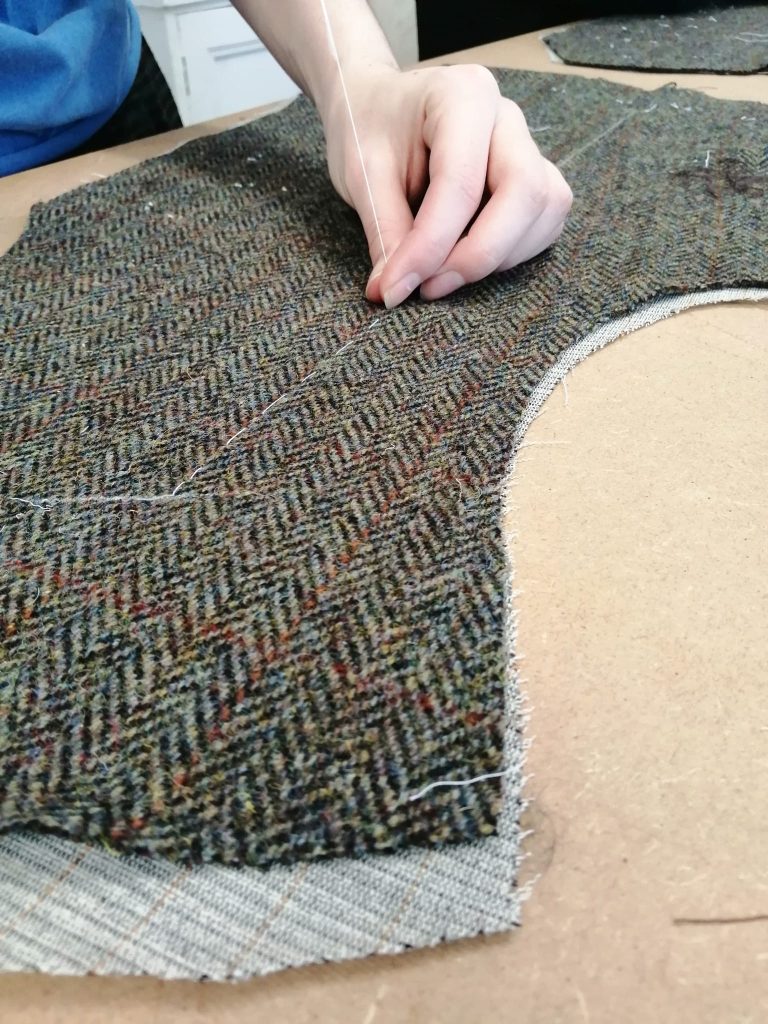
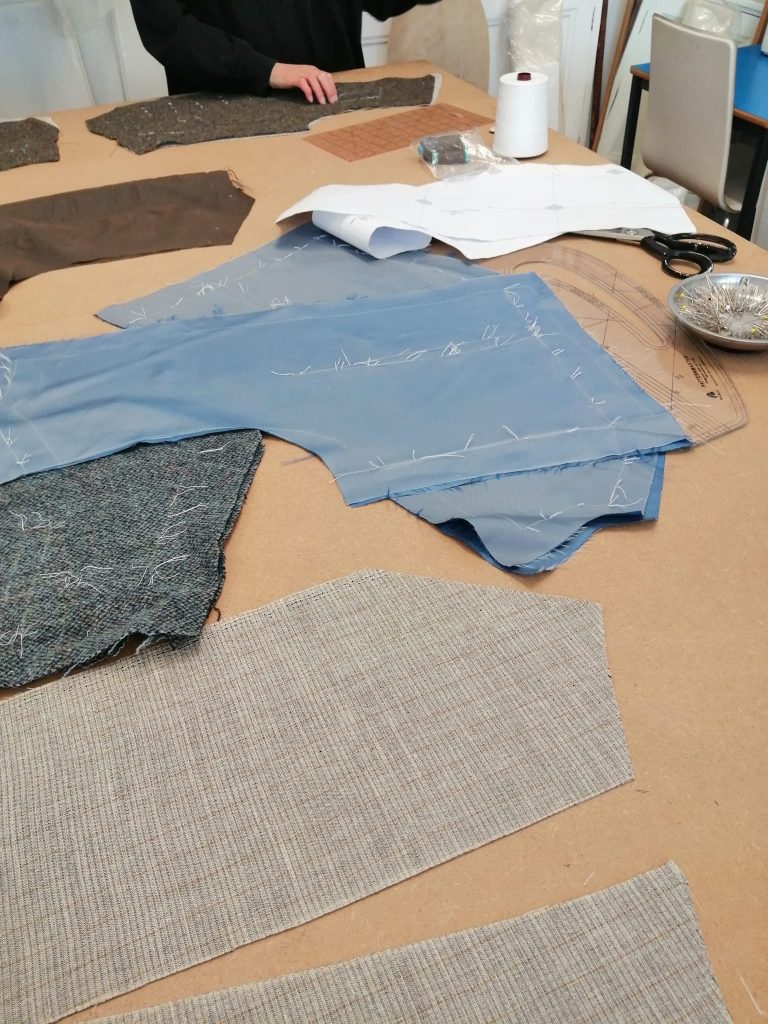
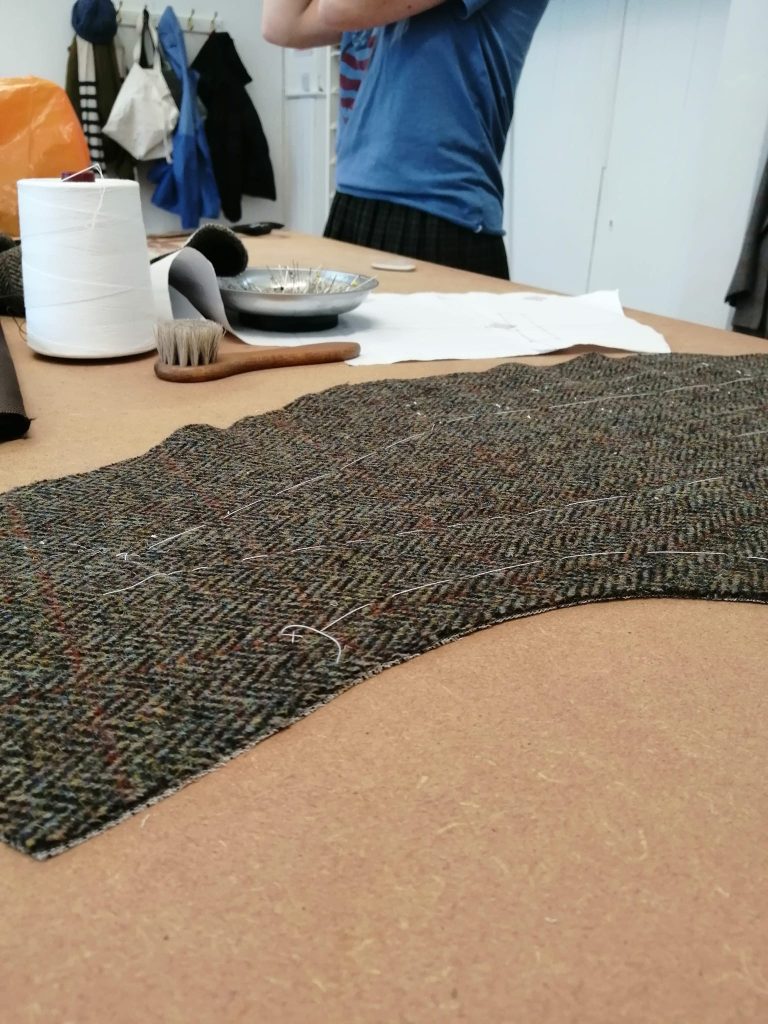
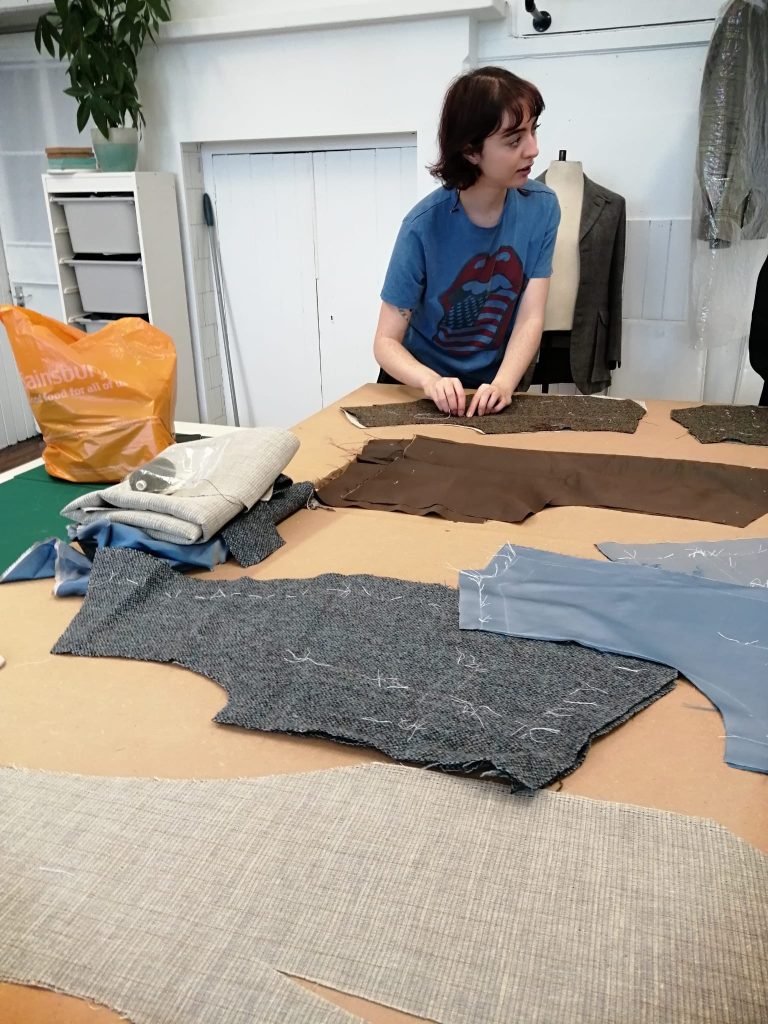
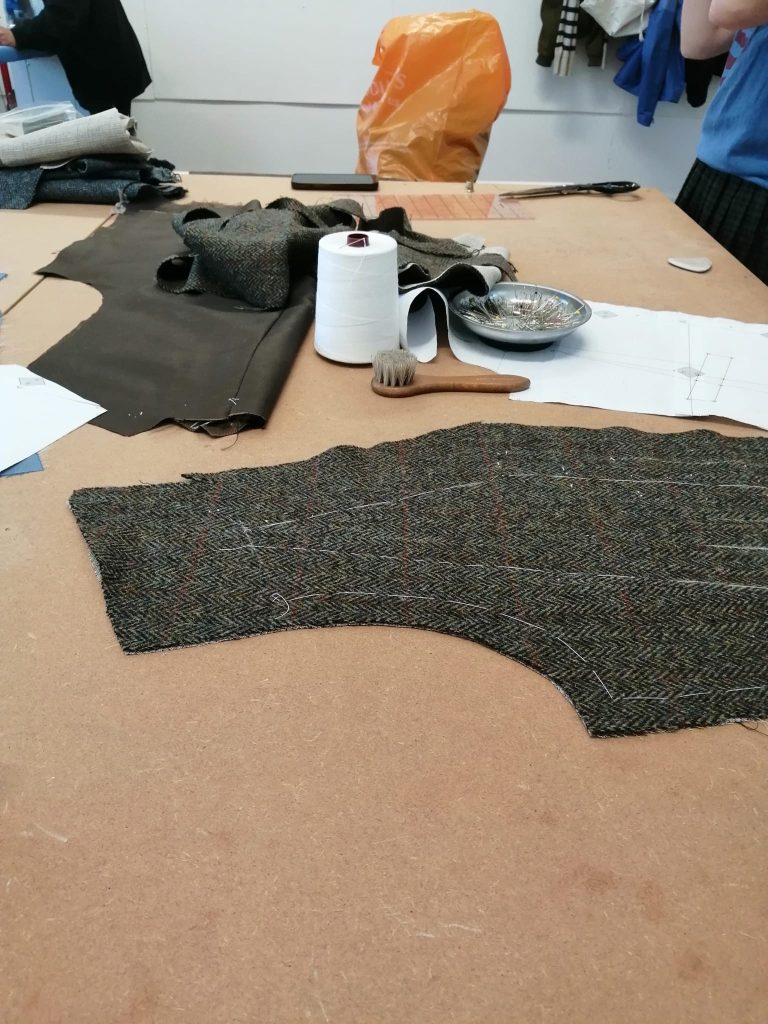
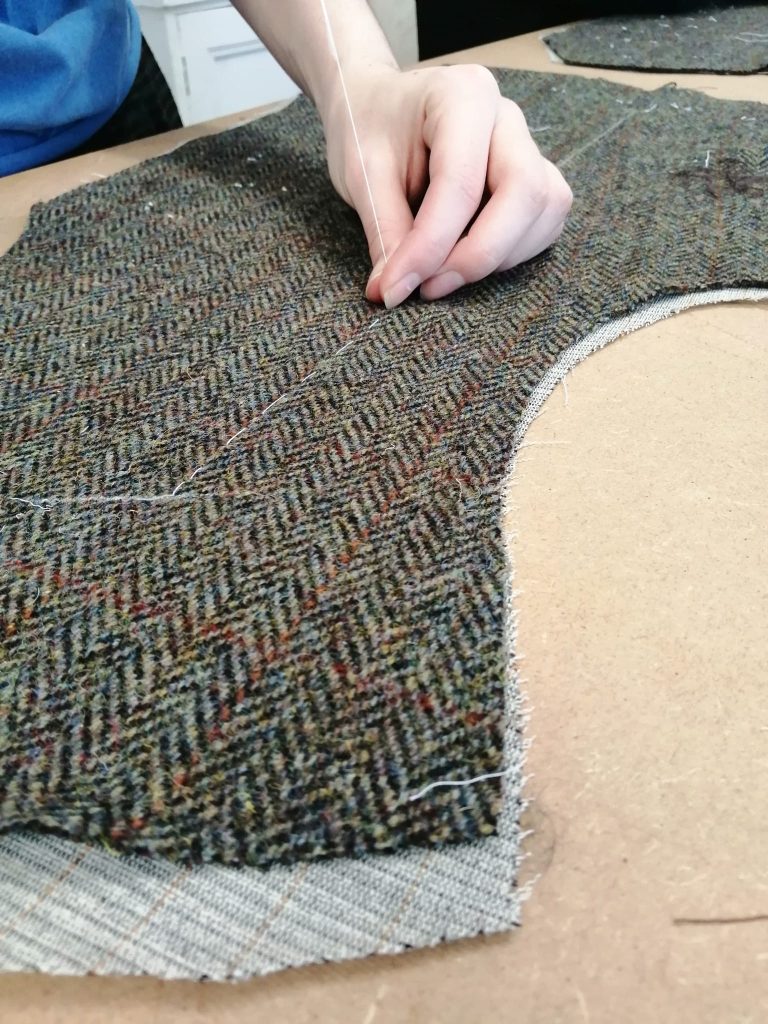
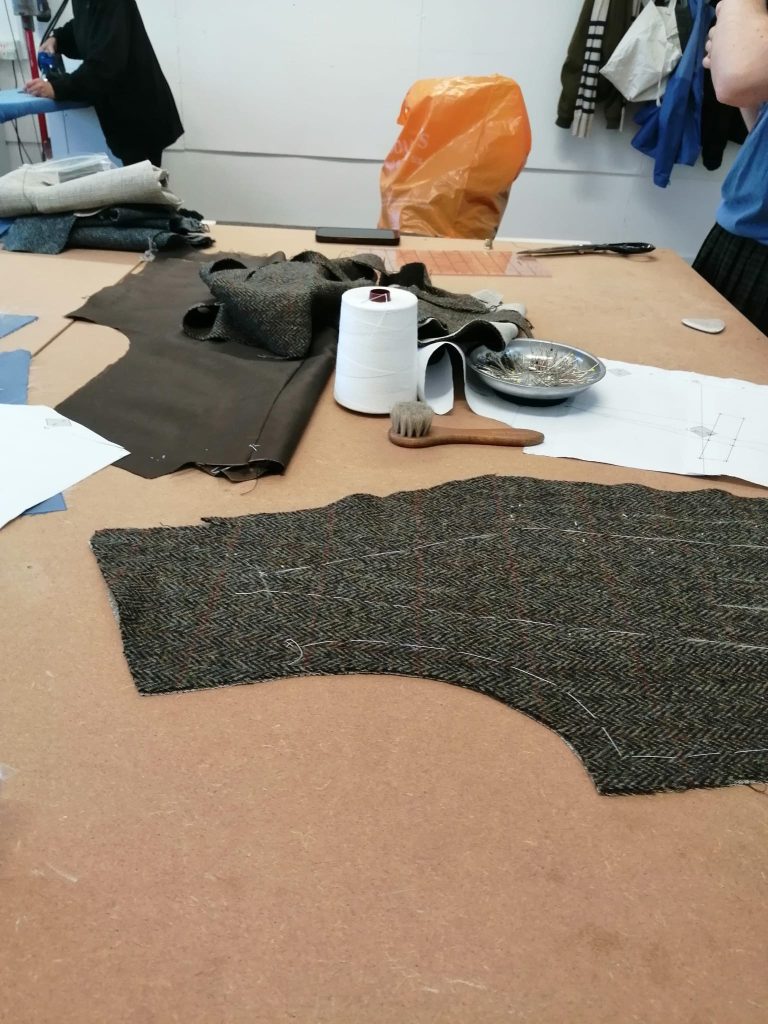
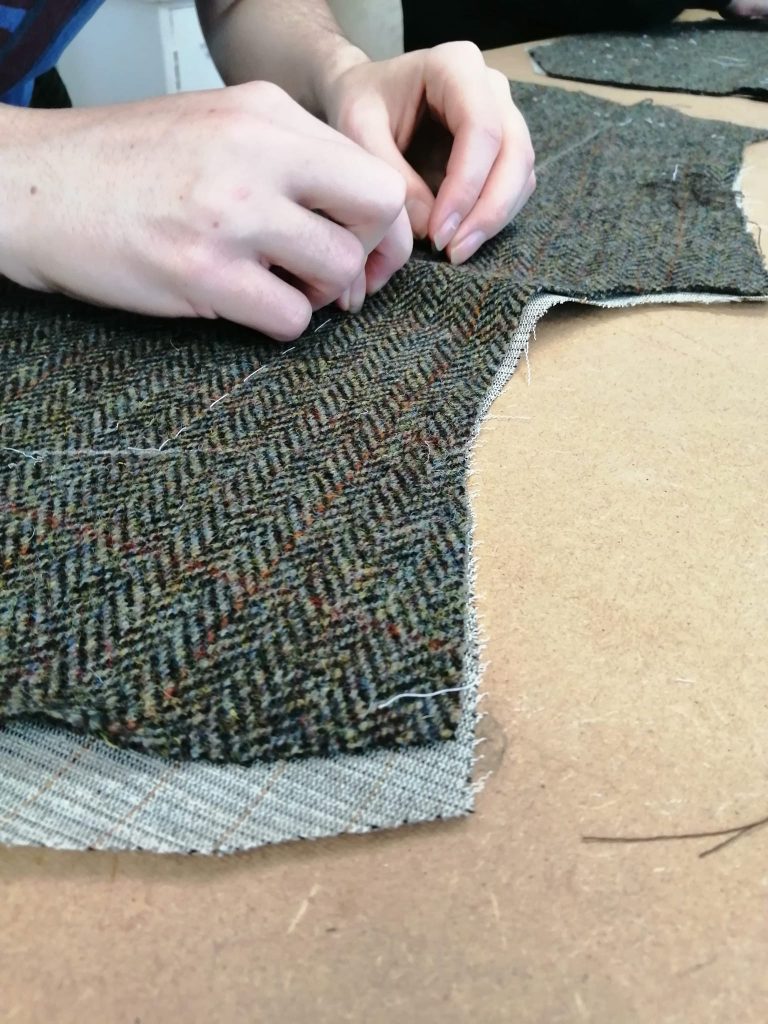
One afternoon a week, Cara and Sam travel through to Edinburgh to train with master tailor Poppy Wright at her studio. It’s time set aside for focused learning, careful practice, and building skills slowly and properly.
Poppy brings an extraordinary depth of experience to this work. She has worked with very high-profile clients, as well as extensively across film and television — including serving as Head Tailor on Outlander for two series, working on the first two seasons of Bridgerton, and creating garments for artists such as Robbie Williams and Take That. Alongside this, she is now passing on her knowledge and training the next generation of tailors.
Cara and Sam are learning skills that take time to develop, from pattern drafting and cutting through to fitting and finishing, building an understanding of why garments are made the way they are and growing confidence in careful, precise tailoring done properly. They’ve also both fallen slightly in love with Poppy’s industrial sewing machine (while I remain happily old-school and firmly in the hand-sewing camp), and all three of us are united in our admiration for her amazing professional ironing station, which has very quickly become the gold standard.
This training is also helping us broaden how we think about Highland dress — not just kilts, but jackets, waistcoats and proper two-piece trews, all of which rely on strong tailoring foundations, good fit, and thoughtful construction. We have a strong commitment to slow fashion and responsible clothing production. We want to make things that take time, are made well, and are designed to last — clothing that can be repaired, altered, and worn for years rather than rushed through production and replaced. That approach requires skill, patience, and deep knowledge, which is exactly what this training is building. We are taking our time getting ready for whatever the future holds and investing in our team at the same time too.
At present, there is nowhere in Scotland to formally learn tailoring skills in a sustained, practical way. That’s a huge gap, and one that risks these skills disappearing altogether. What Poppy is doing — opening her studio, sharing her knowledge, and actively training the next generation — is quietly radical. It’s a direct challenge to fast fashion, to short-term thinking, and to the idea that craft skills aren’t worth investing in. We’re incredibly grateful to be part of that, and are determined to carry it forward.