
There is a particular kind of quiet that settles over a room when someone begins to stitch. It is not silence exactly, but a softening. A slowing. A shift in the air as hands take up familiar tools and the body remembers a rhythm older than memory. The needle dips, the thread follows, the fabric yields, and something inside the maker begins to settle. For many people, this simple act of stitching is far more than a craft. It is a way of grounding themselves, of finding steadiness in a world that often feels overwhelming, and of reconnecting with parts of themselves that have been neglected or bruised by life’s demands. Increasingly, research supports what generations of makers have known intuitively: working with our hands is profoundly good for our mental health.
Stitching is a deeply embodied activity. It requires the cooperation of mind, body, and breath, drawing us into a state of focused attention that is both calming and restorative. The repetitive, rhythmic movements of needlework activate the parasympathetic nervous system, the branch of the autonomic nervous system responsible for rest, recovery, and emotional regulation (Porges, 2011). This is the same physiological response triggered by slow breathing, gentle rocking, or humming. When we stitch, our heart rate slows, our breathing deepens, and our bodies shift into a state that supports healing rather than vigilance. In a world where many people live in a near‑constant state of stress or hyperarousal, this shift is not trivial. It is a doorway back into safety.
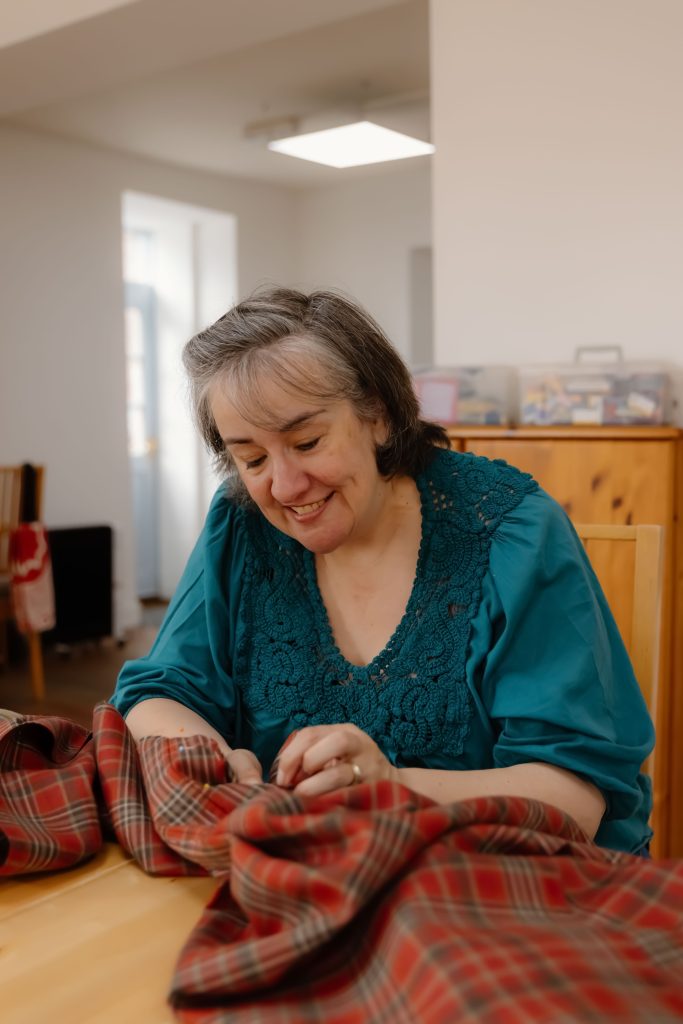
The mental focus required for stitching is also a form of mindfulness. Unlike meditation, which some people find abstract or difficult to access, stitching offers a concrete anchor for attention. The mind is invited to rest on the feel of the fabric, the movement of the needle, the colour of the thread, the small, deliberate actions that build into something meaningful. Research shows that mindful, hands‑on activities reduce anxiety, improve emotional regulation, and support overall psychological wellbeing (Keng, Smoski and Robins, 2011). Stitching provides this mindful state almost effortlessly. The craft itself does the guiding. The maker simply follows.
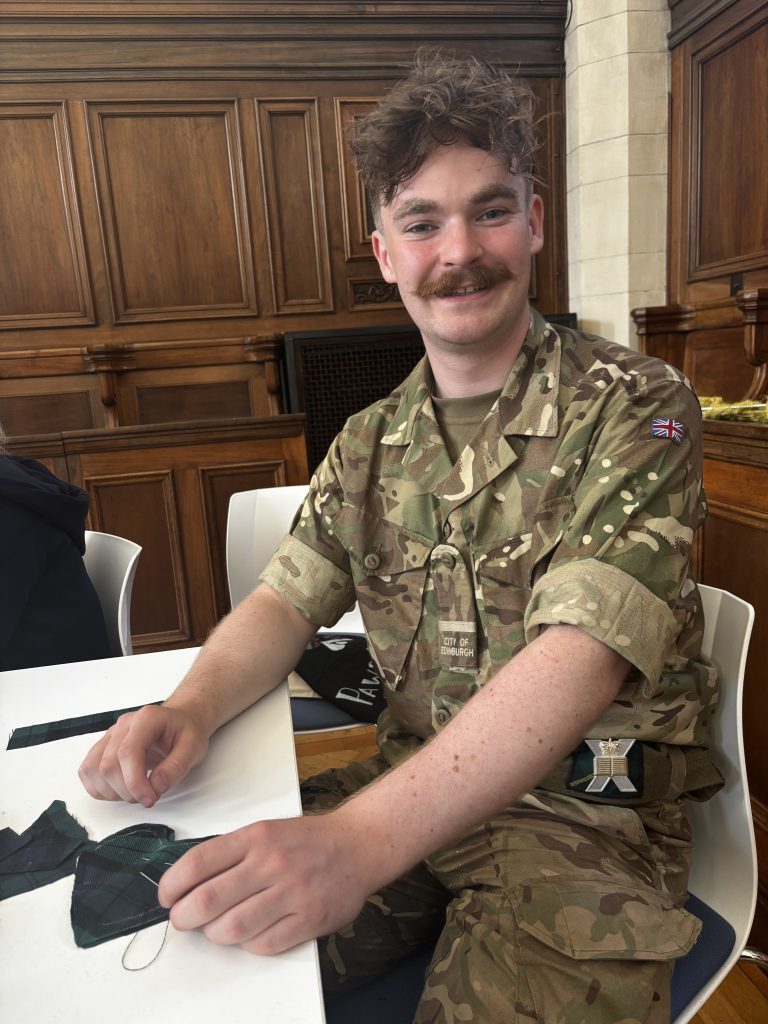
One of the most powerful aspects of stitching is the sense of achievement it provides. Even a small piece of work—a neatly sewn seam, a repaired tear, a finished patch—can create a feeling of progress and capability. Studies show that completing meaningful tasks activates the brain’s reward pathways and boosts self‑esteem (Hekler et al., 2013). For people who are struggling with depression, trauma, or chronic stress, this sense of accomplishment can be especially important. It offers a reminder that they are capable of creating something good, something useful, something beautiful. It is a quiet but potent antidote to feelings of helplessness.
Stitching also offers a rare sense of control. In a life that may feel chaotic or unpredictable, the small, deliberate actions of needlework provide a space where the maker’s choices have clear, visible outcomes. Each stitch is a decision. Each row is a small act of agency. Over time, these small acts accumulate into something larger—a garment, a repair, a piece of art—and the maker can see the tangible results of their effort. This sense of control is not merely symbolic. Research shows that activities which allow individuals to make meaningful choices and see the results of their actions support psychological resilience and reduce feelings of powerlessness (Fancourt and Finn, 2019).
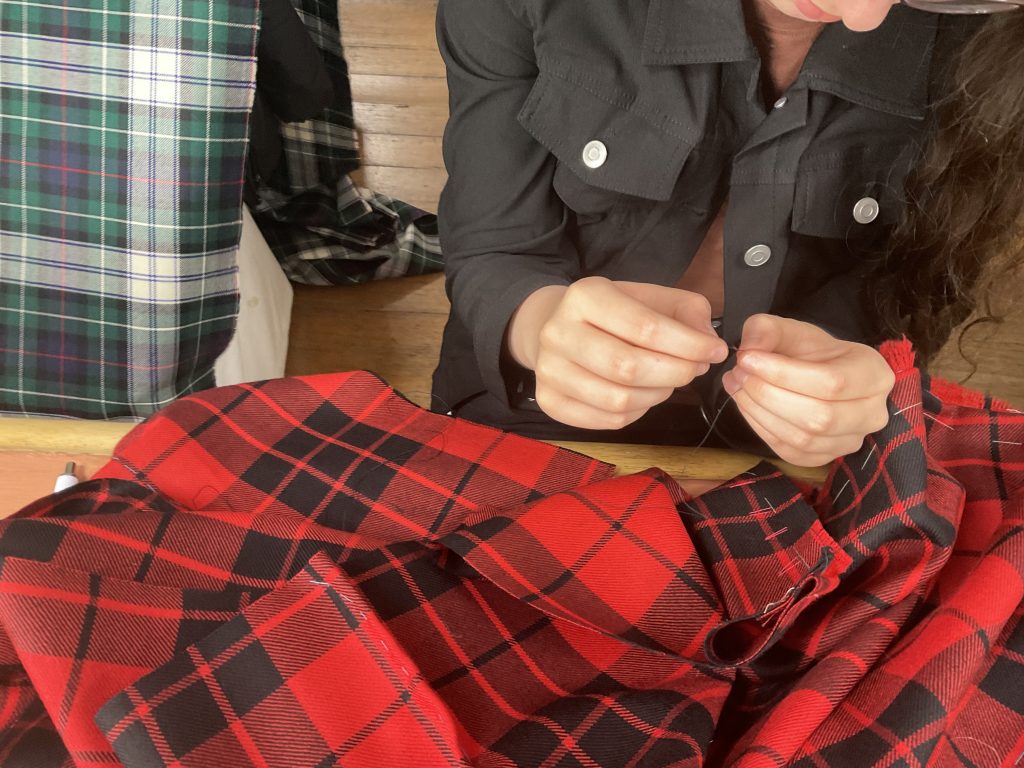
Beyond the individual experience, stitching has long been a communal activity. Historically, people gathered to sew, mend, and create together, sharing stories, skills, and support. That tradition continues today in craft groups, sewing circles, and community workshops. Research shows that shared creative activities reduce loneliness, increase feelings of belonging, and strengthen social bonds (Johnson and Wilson, 2005). In a time when many people feel isolated or disconnected, the simple act of sitting together with fabric and thread can create a sense of community that is both gentle and profound. Conversation flows more easily when hands are busy. People feel less exposed, more grounded, more able to share their experiences. The craft becomes a bridge between individuals, offering connection without pressure.
Stitching can also serve as a way to process emotions. The slow, repetitive movements create a space where thoughts can settle and feelings can be explored safely. Many people find that stitching helps them work through grief, trauma, or stress in a grounded, embodied way. The act of making becomes a form of emotional regulation, allowing difficult feelings to be held without becoming overwhelming. This aligns with research showing that creative activities support emotional expression and help individuals make sense of their experiences (Pöllänen, 2015). Stitching, in this sense, becomes a form of self‑care that is both gentle and deeply effective.
The cognitive benefits of stitching are also significant. Activities that involve fine motor skills, sustained attention, and problem‑solving have been shown to support cognitive resilience and improve memory (Park et al., 2014). For older adults, engaging in textile crafts can help maintain cognitive function and provide a sense of purpose. For younger people, stitching can support focus, patience, and the development of practical skills. Across all ages, the cognitive engagement required for stitching offers a healthy challenge that keeps the mind active and engaged.
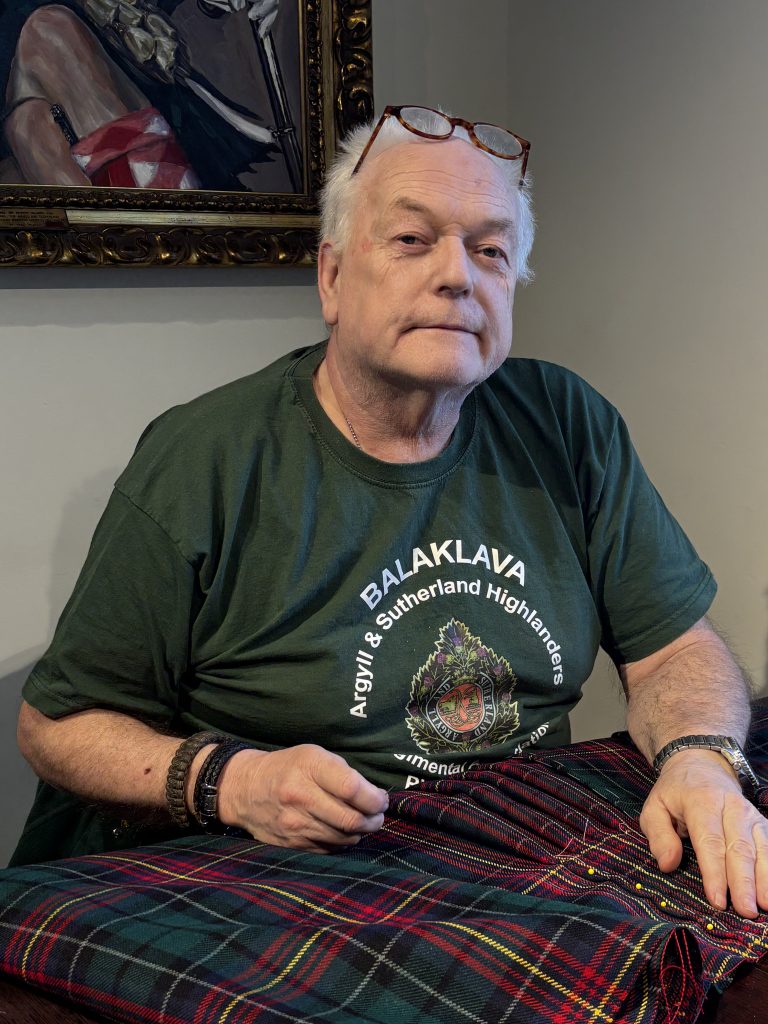
A growing body of research supports the mental health benefits of textile crafts. A large survey of more than 3,500 knitters found that frequent engagement in knitting was associated with higher levels of calm, happiness, and social connection (Riley, Corkhill and Morris, 2013). Other studies have shown that creative activities, including sewing and embroidery, reduce stress, improve mood, and support recovery from depression (Fancourt and Finn, 2019). These findings reinforce what many people experience firsthand: stitching is not merely a hobby. It is a meaningful, evidence‑based tool for supporting mental health and wellbeing.
In our own workshops, we see these benefits every day. Someone arrives tense, withdrawn, or unsure of themselves. They sit down, pick up a needle, and begin to stitch. Their shoulders drop. Their breathing deepens. A small smile appears when a seam sits just right. A conversation begins. A connection forms. Over time, we see people grow in confidence, skill, and self‑belief. We see them find community, purpose, and moments of peace. We see them rediscover parts of themselves that had been lost or neglected. Stitching does not fix everything, but it offers a place to begin again. It offers a way to rebuild, slowly and steadily, one stitch at a time.
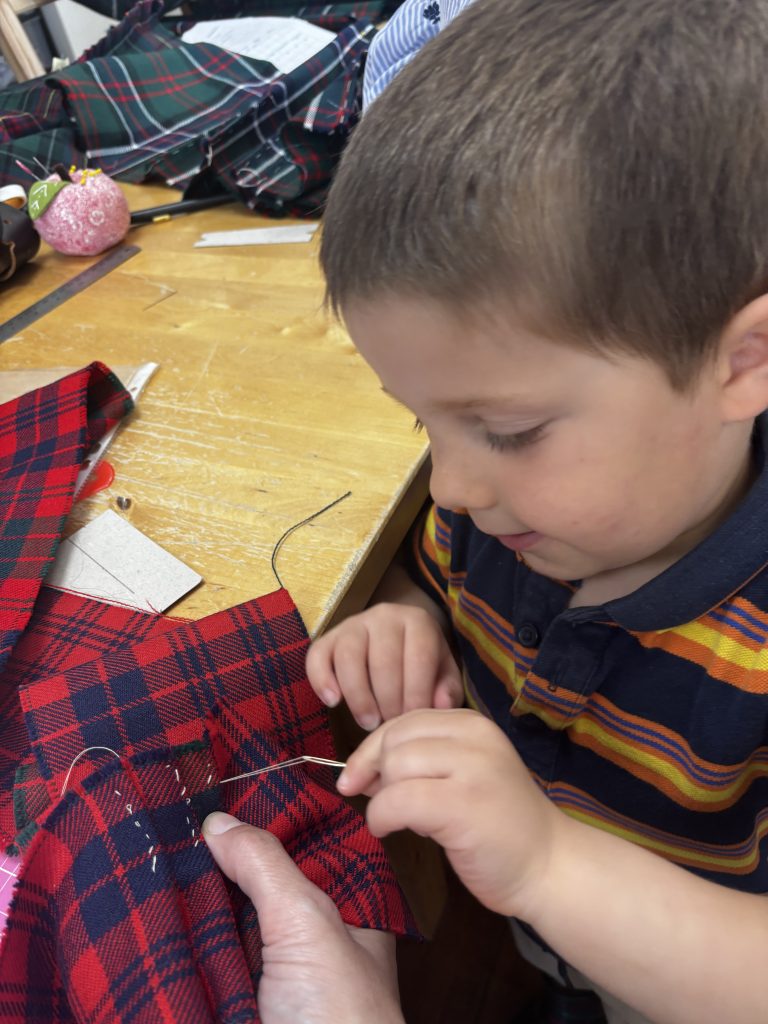
The beauty of stitching is that it meets people where they are. It does not demand perfection. It does not require expensive materials or specialised equipment. It simply asks for presence, patience, and a willingness to begin. In return, it offers calm, connection, and a sense of accomplishment. It offers a way to care for oneself that is both practical and deeply nurturing. In a world that often prioritises speed, productivity, and constant stimulation, stitching invites us to slow down, to breathe, and to reconnect with our own hands and hearts.
For some, stitching becomes a daily ritual, a way to mark time and create moments of stillness. For others, it becomes a social activity, a way to build friendships and share stories. For many, it becomes a form of healing, a way to process emotions and rebuild confidence. Whatever form it takes, stitching offers something valuable and enduring. It reminds us that we are capable of creating beauty, of repairing what is damaged, and of finding meaning in small, steady actions.
As we continue to explore the role of craft in mental health, it becomes increasingly clear that stitching is not simply a pastime. It is a practice that supports wellbeing on multiple levels—physiological, emotional, cognitive, and social. It is a way of caring for ourselves and for one another. It is a reminder that healing does not always come in grand gestures or dramatic breakthroughs. Sometimes, it comes in the quiet, patient work of needle and thread.
References
Fancourt, D. and Finn, S. (2019) What is the evidence on the role of the arts in improving health and well-being? WHO Regional Office for Europe.
Hekler, E.B., Gardner, C.D., Robinson, T.N. and Alderman, B.L. (2013) ‘Effects of completing a meaningful task on affective states’, Emotion, 13(3), pp. 481–490.
Johnson, J. and Wilson, L. (2005) ‘“It’s the doing that matters”: A study of craft practice’, Journal of Design History, 18(1), pp. 23–38.
Keng, S.L., Smoski, M.J. and Robins, C.J. (2011) ‘Effects of mindfulness on psychological health’, Clinical Psychology Review, 31(6), pp. 1041–1056.
Park, D.C., Lodi‑Smith, J., Drew, L. et al. (2014) ‘The impact of sustained engagement on cognitive function in older adults’, Psychological Science, 25(1), pp. 103–112.
Pöllänen, S. (2015) ‘Elements of crafts that enhance well-being’, Journal of Leisure Research, 47(1), pp. 58–78.
Porges, S.W. (2011) The Polyvagal Theory: Neurophysiological Foundations of Emotions, Attachment, Communication, and Self-Regulation. New York: W.W. Norton.
Riley, J., Corkhill, B. and Morris, C. (2013) ‘The benefits of knitting for personal and social wellbeing in adulthood’, British Journal of Occupational Therapy, 76(2), pp. 50–57.